Print this page (attorney exhibit format)
Chain of Chain of Custody
Boston-based, serving clients nationwide
Focused exclusively on defensible digital evidence preservation and acquisition for legal and insurance-related matters.
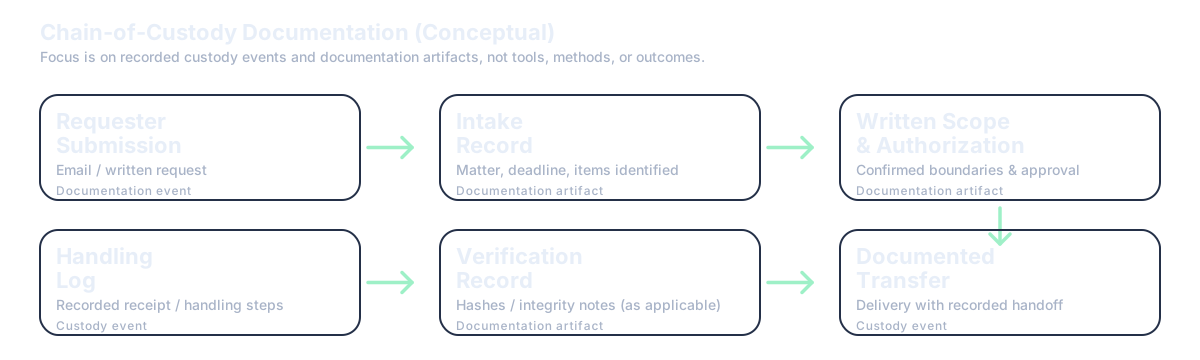
What “chain of custody” means
Chain of custody is a chronological record of who controlled evidence, when it changed hands, and what was done to protect integrity. For digital evidence, this also includes documenting the preservation method and integrity verification.
What a defensible record typically includes
- Evidence identifier (item ID / label)
- Source description (device/account/system and context)
- Date/time received and by whom
- Handling notes (what was done, by whom, when)
- Transfer events (to/from, method, date/time)
- Integrity checks (hash values where applicable)
FAQ
What is chain of custody in digital evidence?
Chain of custody is a record of who had custody of evidentiary materials, when transfers occurred, and how items were handled and documented.
Does chain of custody prove authenticity?
No. It documents handling events and custody transfers. It does not provide legal conclusions or content interpretation.
What information is recorded in a chain-of-custody record?
Typical entries include item identifiers, dates and times, transfer parties, handling method, and notes on condition or constraints.
Defensible Evidence Documentation for Legal and Insurance Matters
What You Receive
- Chain-of-Custody Record (PDF)
- Acquisition Log and Handling Notes
- Hash Verification Record (where applicable)
- Storage / Device Metadata Sheet (where applicable)
- Delivery Manifest and Verification Outputs
Documentation is produced contemporaneously and maintained in accordance with defined handling procedures. These records are commonly used to support internal review, insurance claims handling, and legal preservation obligations. No legal analysis, content interpretation, or evidentiary conclusions are provided.